
Количката е празна
2 7: Process Cost Demonstration FIFO Method Business LibreTexts
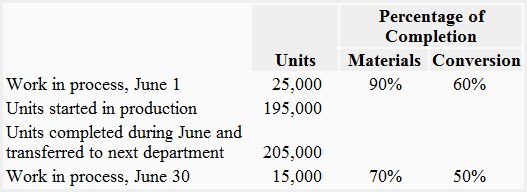
Equivalent units under FIFO method of process costing are the number of finished units that could have been prepared in a process during a period had there been no unfinished units, either in opening WIP or closing WIP. For example, if the opening work-in-progress is 500 units, 40% complete in all respects, then the degree of work to be performed in the current period is 60%. First, the equivalent production of opening work-in-progress should be determined by taking into account the degree of work to be performed in the current period.
What’s the point of process costing?
The implicit assumption is that all units in the group are roughly at the average same level of completion (process costing firms are very unlikely to find it useful to get more specific than that). Finally, the equivalent units of production calculated via the previous three steps should be aggregated to ascertain the total output in terms of equivalent units or equivalent production. These costs are then used to calculate the equivalent units and total production costs in a four-step process. I explained, above, FIFO’s Step #3 using what’s called the subtractive method. I told you to subtract the beginning WIP equivalent units from the total units completed so we could apply the rates to the equivalent units completed using this period’s work. Even though the firm needs an aggregate number to get overall ending WIP value, the firm will want to keep data on how much of that $20,493.81 is due to conversion costs, direct materials, and transferred-in costs.
How to Calculate Equivalent?
None of the ten units is complete; merely the equivalent amount of work necessary to complete three units is said to have been performed. Equivalent units are calculated by multiply the number of physical units in work in process by the estimated percentage of completion of the units. If the firm frequently has significant swings in per-unit costs, the weighted average method is less appropriate. It holds workers and managers accountable, in part, for cost decisions from prior periods. Under the weighted average method, we use beginning work in process costs AND costs added this period.
Ask Any Financial Question
The limitation of equivalent units computation is that it does not take into account the number of units completed in any specific unit. For example, let’s assume that a company manufactured 2000 motorcycles for this year and 30% of motorcycles were lost due to defects. If these defects are non recurring then such units should be excluded from equivalent production. Essentially, the concept ofequivalentunits involves expressing a given number ofpartially completed units as a smaller number of fully completedunits. We do this because it is easier to account for whole unitsthen parts of a unit.
- The reason is that many processes may involve scrap, waste, or spoilage (e.g., evaporation, spilling, etc.).
- A complete production cost report for the shaping department is illustrated in Figure 5.6.
- While process costing tracks costs for huge number of identical products, job costing tracks costs for specific, individual jobs or orders, which are often unique.
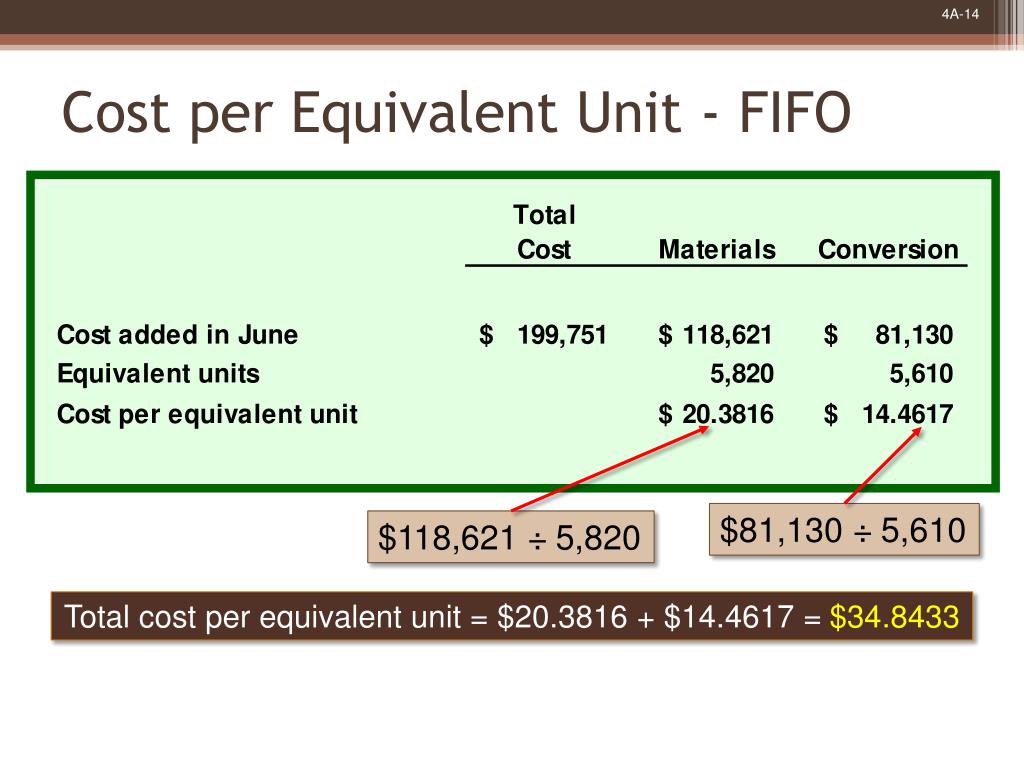
Unlike the weighted average method, the FIFO method does not involve any averaging out of the total costs incurred during a period. The total materials costs for the period (including any beginning inventory costs) is computed and divided by the equivalent units for materials. The total of the cost per unit for material ($1.17) and for conversion costs ($2.80) is the total cost of each unit transferred to the finishing department ($3.97).
FIFO (First-In, First-Out) and WA (Weighted-Average) are methods used to assign costs to units produced. FIFO assumes that the oldest costs are assigned to the units completed first. For example, for a factory is making chocolate bars, FIFO means the cost of the ingredients and labor from the beginning of the production period are used first to calculate the cost of the finished bars. This helps to track what is cost accounting the flow of costs more accurately based on the production timeline. On the other hand, the Weighted-Average method blends all the costs together to find an average cost per unit. So, if the factory had different costs for chocolate bars at different times, the Weighted-Average method would add up all the costs and divide by the total number of bars produced to get a single average cost per bar.
If all the product units are the same, each product unit is probably responsible for the same amount of overhead cost. To spend time or money on deciding each unit’s responsibility for overhead costs down to the micro-penny is a waste. In this method, both the beginning and ending inventory is converted into equivalent units, so there is a bit more work to do. For those units that were in the beginning inventory, we need to figure out how much work was DONE on them in this period to get them to the point of being transferred to the next process. For those items in the ending inventory, it is the same as the weighted-average method, where we need to calculate how much work has been done to them already.
Accountants have devised the concept of an equivalent unit, a physical unit expressed in terms of a finished unit. Let’s update our overhead allocation equation to incorporate our first complication of equivalent units. Process costing works by tracking the costs of each step, totaling the costs, and dividing by the total number of items produced. This is called the Weighted Average method and there are other methods too (discussed below). For example, during the month of July, Rock City Percussion purchased raw material inventory of $25,000 for the shaping department.
Together, equivalent units and the chosen method (either FIFO or Weighted-Average) help companies accurately calculate production costs. Direct material is added in stages, such as the beginning, middle, or end of the process, while conversion costs are expensed evenly over the process. Often there is a different percentage of completion for materials than there is for labor.